Connecting people who want to make a difference with the groups that need support.
Founded in 1995, Point North works to fight poverty and enrich lives across County Durham, Tees Valley and the wider North East, by connecting people and businesses who want to make a difference with community groups and voluntary organisations looking for support.
1995
the year Point North began its work in County Durham
£80m+
raised and then granted to date
Point North is a charity, an independent grantmaking organisation and the accredited community foundation for County Durham and Tees Valley. In simple terms, it raises funds through donors, people and businesses who want a better today and a brighter tomorrow for local people, and distributes those funds as grants to community groups.
Its work began in County Durham to support local non-profits in addressing the needs of local people. Today its mission is to fight poverty and enrich lives for everyone in County Durham, the Tees Valley and the wider North East.
The majority of its grants support voluntary groups and charities making a difference in County Durham, Darlington and the Tees Valley, but Point North grants are also found across the wider North East and beyond. The small team is proudly rooted in County Durham, where its work began in 1995.
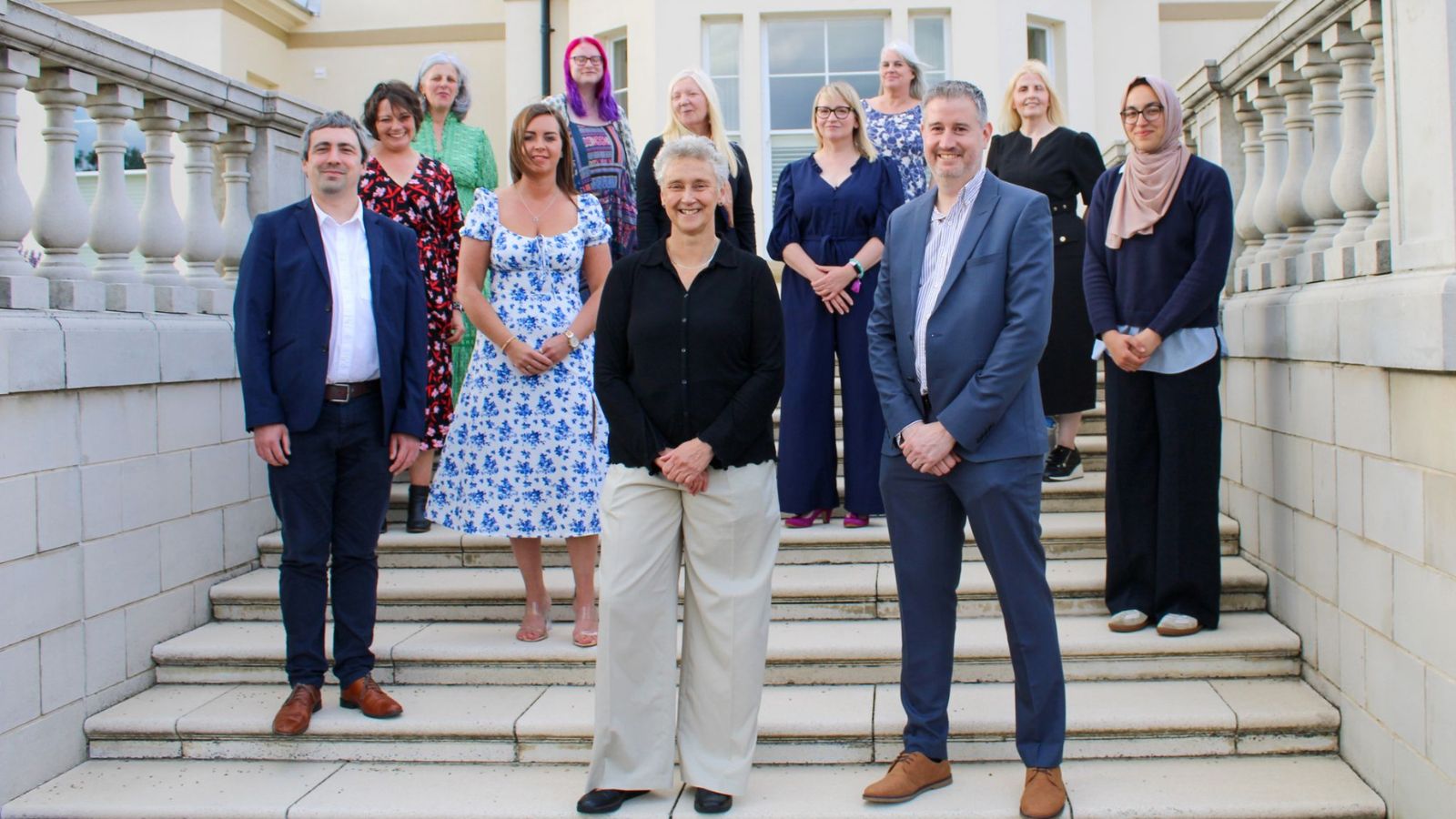
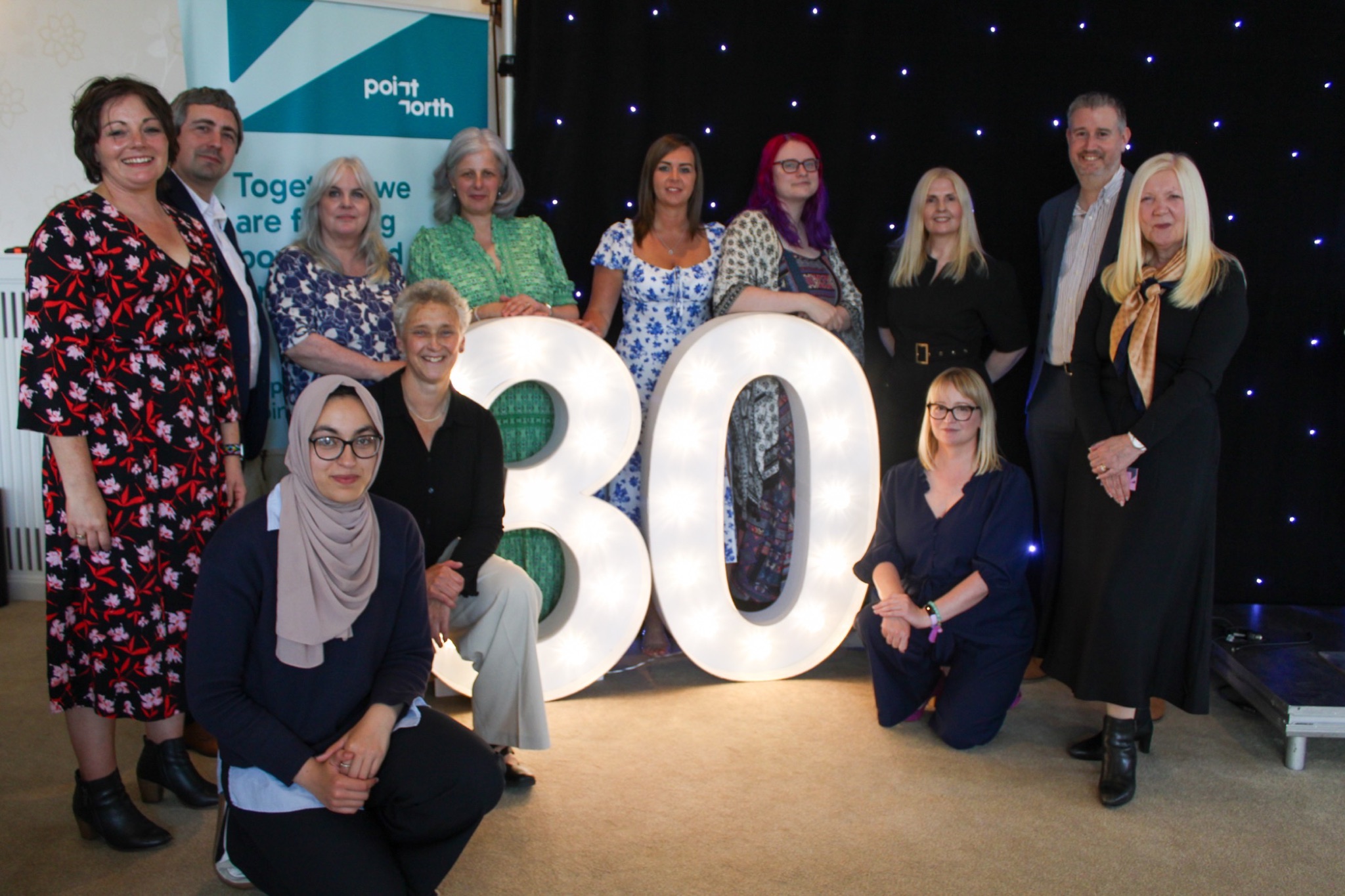
The Point North team celebrating 30 years.
Across the North East
Point North in the community.
Moments from the communities Point North serves across the North East.
Coffee morning at Burnhope Community Centre
Case studies
Digital access changes lives.
For young people across County Durham, Tees Valley, Tyne and Wear and the wider North East, digital exclusion can limit education, independence, communication and confidence. By funding essential digital equipment, Point North grants help remove those barriers. These are some of their stories.
Case study
Opening the door to learning, connection and hope
When B arrived in the UK as an unaccompanied asylum-seeking child, they were not only trying to rebuild their life in a new country; they were also trying to learn a new language, continue their education and imagine a future for themselves. With no contact with their birth family, having a reliable source of support, information and connectivity mattered.
The digital barrier
B was studying English at a local college and hoped to progress to A Levels, with the long-term ambition of going to university and becoming a vet. But without their own laptop, those ambitions were harder to reach. They could not easily complete coursework, study independently, access online information, or use digital tools to support their English language development. In practice, the lack of a device meant the digital world that many young people rely on for learning and connection was not fully open to them.
What the grant made possible
Through a Point North grant, B received a laptop, anti-virus software, Microsoft Office and a laptop bag. This practical package gave them safe, reliable access to the tools they needed to learn, communicate and take part more fully in daily life.
From isolation to connection
The timing of the grant was especially important. During lockdown, B’s laptop helped them stay connected with professionals and support networks at a time when isolation could have easily deepened. It also enabled them to continue improving their English while accessing information in their native language, helping them understand what was happening around them and feel more informed, included and in control.
For B, the laptop was more than equipment. It meant being able to study from home, complete coursework, stay focused and keep moving forward. It gave them a bridge to language, learning, confidence and future opportunity, all of which are essential for a young person building a life after uncertainty.
In B’s case, the grant helped ensure that their circumstances did not define their access to learning, connection or opportunity. It gave them the tools to participate, progress and keep working towards the future they want to build.
Case study
A laptop that helped a care leaver take control of their future
For many young people, having a laptop is part of everyday student life. For H, it became the difference between struggling to keep up and being able to study with confidence.
H is a care leaver who was studying at Newcastle University. They were living close to university in shared accommodation and working hard to complete their course, but without their own laptop, everyday academic tasks were much harder than they needed to be.
Their course involved extensive reading, research, essays, exams and lecture notes. Relying on university library computers meant working around opening hours, travelling to access equipment and trying to complete long pieces of work without the flexibility most students take for granted. When learning moved online during the pandemic, the barrier became even more serious.
“A laptop is fundamental to my degree course because of the extensive essays assigned that require a great deal of extra research reading.”
Through the grant, H received a laptop that enabled them to work from home, access online lectures, complete assignments and keep their university work organised. It reduced the pressure of constantly needing to use shared facilities and gave them greater independence in how and when they studied.
“A laptop being provided for me has reduced the stress of having to continually go to the library.”
Having the right equipment helped H take part more fully in university life, feel less excluded from their peers and focus on succeeding in their final year.
“I am now completely accepted on my course and happy to have a laptop that works well.”
A relatively small grant removed a major barrier to learning, reduced stress and helped a young person continue building an independent future. With the right digital tools, H could access opportunities on a more equal footing and keep moving towards the life they wanted to build.
Case study
The right laptop for P’s next step towards independence
P is a determined 16-year-old from Durham with a clear ambition for the future. Their passion is horses, and they hope to build a career in the equine profession. After years in care, P has found stability in a long-term foster placement where they are supported to focus on education, friendships and the future they want to build.
P has worked hard to keep moving forward. They achieved excellent school attendance, often stayed behind for extra tuition and now attend college, where they are studying towards a Level 2 City and Guilds Diploma in Equestrian Studies. Alongside college, they gain valuable experience through volunteering at stables and giving their time as a Young Leader with Beavers and Cubs.
But without the right digital equipment, P faced barriers that could have held them back. P is diagnosed with Foetal Alcohol Spectrum Disorder, Developmental Coordination Disorder and dyslexia, and also uses coloured lenses to support their vision. They needed a lightweight laptop with a large screen, spellchecking tools and an electronic calendar to help with coursework, organisation and memory prompts.
For P, digital access is about having technology that works for their specific needs. A suitable laptop means they can type work more clearly, use tools that support spelling and organisation, access learning resources, and manage college life with greater independence.
The grant helped remove a practical barrier to education and opened up a more equal route into learning. With the right laptop in place, P is better able to complete coursework, stay organised, participate fully at college and continue building the skills needed for a future career with horses.
By understanding the barriers a young person faces and funding the equipment that fits their needs, the grant helps tackle the digital divide in a way that is meaningful and lasting. For P, it means more than access to technology; it means greater confidence, independence and the chance to keep working towards a fulfilling future.
Case study
Supporting a single mother to study, parent and build a stronger future
S is a single mother who is determined to create a more secure future for herself and her child. At 17, she moved into an assisted living flat with her 8-month-old baby after spending time in a mother and baby unit. She had already shown remarkable commitment to her education, achieving five GCSEs while 38 weeks pregnant.
With limited family support, S has relied on professional support networks while learning to manage semi-independent living, parenting responsibilities and plans for college. She is motivated to continue her education and hopes to train for a future career as a midwife.
But without access to a laptop and printer, S faced practical barriers that could have made it harder to take the next step. Starting college means needing to access online learning resources, complete assignments, print coursework and important documents, communicate with tutors, and stay organised. For a young parent balancing study and childcare, being able to do that from home is essential.
“As a young mum, this support has been particularly important.”
Through the grant, S received the equipment she needed to begin college feeling prepared: a laptop, printer paper and a protective laptop case. This support removed a financial pressure at a crucial time and gave her reliable access to the tools needed for learning.
“Having my own laptop means I can complete assignments, access online learning resources, and stay on top of my coursework both at college and at home.”
Having her own equipment means S can study around her parenting responsibilities, manage her time more effectively and build confidence in her independence. It means she no longer has to rely on others to access technology or complete college work.
“The grant has increased my confidence, supported my independence, and given me the tools to work towards my qualifications and future career goals.”
By helping S access essential digital equipment, the grant has reduced barriers to learning, eased financial pressure and supported her to take positive steps towards a stable future. For S and her child, it means greater opportunity, confidence and hope.
Case study
Opening pathways to work for young people across the North East
Young people across the North East face significant barriers to education, employment and training. Nationally, the number of young people who are not in education, employment or training (NEET) has reached one million. Alan Milburn’s recent Young People & Work interim report describes this as a “chronic problem” of “detachment from the labour market”, driven by system-wide failure and intervention that comes too late. The challenge is particularly acute in the North East: the Youth Futures Foundation (2026) reports NEET risk factors of 13.7% in County Durham and 16.4% in Darlington.
Turning potential into opportunity
MyBigCareer works to address this gap by providing career guidance, practical employability support and workplace experiences for students aged 11 to 18 who are eligible for Free School Meals. The Point North grant funded key areas of this work and helped the charity respond to rapidly rising demand, contributing to the largest number of young people it has supported across the North East.
Growing reach and lasting partnerships
During the funding period, MyBigCareer supported 4,001 young people across the region, compared with 3,547 in the previous year. It also provided one-to-one career coaching to 522 more young people than in the previous academic year.
4,001
young people supported, up from 3,547 the previous year
+522
more young people given one-to-one career coaching
2 in 3
partner schools take part in more than one element of the programme
The funding also helped the charity renew its relationship with Ferryhill School, where it had not delivered career coaching since 2021. Since reconnecting, the school has taken part in several elements of the programme and has already re-booked for the next academic year.
MyBigCareer has continued to deepen its relationships with schools, providing consistent support as students progress from Year 7 to Year 13, helping young people receive sustained guidance rather than a single intervention.
Confidence, skills and clearer futures
Feedback collected during the funding period shows the difference this support is making. Since introducing Net Promoter Scores for teachers and schools, MyBigCareer has consistently achieved a rating of +90, demonstrating how highly schools value the programme.
9 in 10
students gained new skills and knowledge
91%
felt more confident about planning their future careers
+90
Net Promoter Score from teachers and schools
“After Career Coaching sessions, communication skills developed in line with our whole-school objective and focus after having to speak on the Zoom calls.”
Careers Lead, Belmont Community School
At Ferryhill School, an employer representative joined an in-class workshop, giving students the chance to ask about his career journey and gain direct insight into the world of work. The session has inspired MyBigCareer to expand this approach by inviting employees from corporate partners to volunteer in classrooms, alongside its online career coaching.
In their own words
“It has given me confidence to start planning for my future.”
Pupil, Belmont Community School
“It has made me understand more about what comes after secondary school and what employers are looking for.”
Pupil, Ferryhill School
“My career coach helped me understand what I want to do. I learnt more about myself and what I can achieve in the future.”
Pupil, Park View School
The difference Point North grants make
By supporting MyBigCareer, the grant is helping young people who face financial disadvantage gain the knowledge, confidence, connections and practical skills they need to make informed choices. It is enabling more schools to offer sustained careers support and giving thousands of students across the North East a clearer route towards education, training and employment.
Learn more
See Point North in action.
Watch their story, explore where their grants have landed or visit their website. Then join us at the Ball.